
Faucet Leak Repair in Aliso Viejo, CA
Faucet leaks in Aliso Viejo progress faster than in soft-water cities because Moulton Niguel Water District's moderately hard imported supply deposits mineral scale on cartridges, valve seats, and ceramic disc assemblies over time. That scale creates abrasion that shortens the effective service life of faucet internals. A dripping kitchen faucet at one drop per second wastes more than 3,000 gallons of MNWD-imported water per year. Call (949) 325-3122 for faucet leak repair throughout South Orange County.
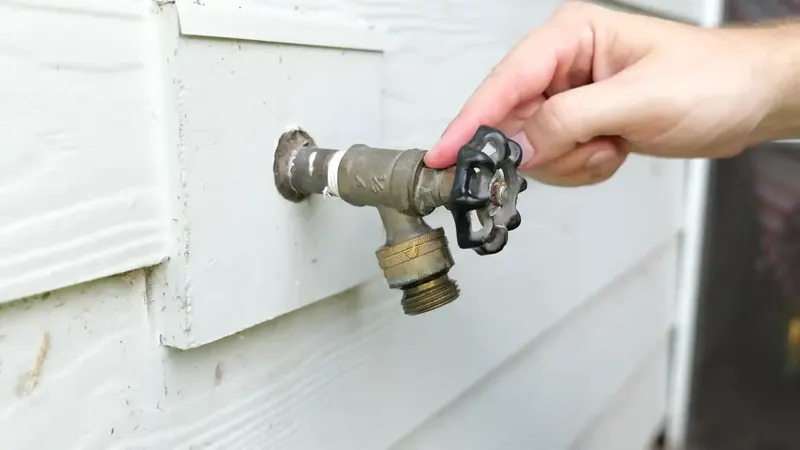
How MNWD Hard Water Affects Faucet Internals
Moulton Niguel Water District delivers water that is moderately hard, typically 8 to 12 grains per gallon, blended from Colorado River and State Water Project sources and treated at the Diemer Filtration Plant in Yorba Linda and the Baker Water Treatment Plant in Lake Forest. That hardness does not make the water unsafe, but it creates an accelerated wear environment for the internal components of kitchen and bathroom faucets.
Cartridge faucets use a ceramic or plastic cartridge to control water flow and temperature mixing. Mineral scale deposits on the cartridge sealing surfaces over years of use, creating microscopic abrasion every time the handle is operated. Eventually the scale prevents the cartridge from sealing completely in the off position, producing a steady drip from the spout even with the handle closed. The repair is cartridge replacement, which is a contained repair that does not require disconnecting the supply lines. However, on angle stop valves under kitchen sinks in Glenwood or Westridge homes from the 1980s, the age of the valve matters: we inspect the angle stop condition before replacing the cartridge, because a corroded angle stop that has not been cycled in years can fail when turned off for the repair. Old corroded angle stops should be replaced at the same time as the cartridge work rather than left as a future failure point. Homes in Westridge and Glenwood where the original faucets and angle stops have never been replaced often benefit from a combined faucet-and-valve replacement on a single visit rather than addressing each component separately as it fails.
Compression faucets, which were more common in bathroom applications in the 1980s and early 1990s build-out, use rubber seat washers that compress against a brass seat to stop flow. Scale deposits on the seat create irregular sealing and accelerate washer wear, producing a drip that gets progressively worse over months. Repair involves replacing the seat washer and, if the seat itself is damaged or pitted by scale, resurfacing or replacing the seat. For leaks that extend beyond the faucet into the supply line itself, see our water line leak repair page. For fixture-area ceiling or wall stains that suggest a supply line failure above rather than a simple faucet drip, see pinhole leak repair. Call (949) 325-3122.
Under-Sink Connections and Angle Stop Valves
Faucet supply connections involve a flexible supply hose running from an angle stop valve on the supply pipe stub-out to the faucet inlet. In Aliso Viejo's first-phase homes, these connections were made in the 1980s and some have not been serviced since. The angle stop valves in Glenwood, Westridge, and Audubon kitchens and bathrooms are the same age as the rest of that era's copper supply system, and they experience the same MNWD-driven internal corrosion. A valve that has not been cycled in fifteen or twenty years may not close fully when you turn it to shut off water for a faucet repair. When we arrive for a faucet repair in a first-phase neighborhood, we test the angle stop closure first. If it does not close completely, we replace it as part of the repair rather than proceeding with the main shutoff valve alone and leaving a defective angle stop under the sink. This prevents the scenario where a simple faucet cartridge replacement creates a separate angle stop emergency the following month. Call (949) 325-3122.
Frequently Asked Questions
Moulton Niguel Water District's moderately hard imported water deposits mineral scale on faucet cartridges and valve seats. That scale creates abrasion every time the handle is operated and prevents the cartridge from sealing fully in the closed position. The drip typically starts as occasional drops and progresses to a continuous stream as the scale builds up. Cartridge replacement resolves the symptom; in first-phase neighborhoods we also inspect the under-sink angle stop valves at the same visit. Call (949) 325-3122.
Yes. A faucet dripping at one drop per second wastes more than 3,000 gallons per year, which appears directly on your Moulton Niguel Water District bill. At a faster drip rate, the waste is proportionally higher. In an imported-water district with no local groundwater backup, this is a meaningful loss to both your bill and the district's conservation goals. Call (949) 325-3122.
If the faucet body is sound and the leak is at the cartridge or seat, repair is cost-effective. If the faucet is a 1980s original in a first-phase Glenwood or Westridge home, the body may also have scale buildup in the aerator, mineral deposits in the spout body, and a corroded angle stop underneath. In that case, replacement of the faucet and angle stop together is often more cost-effective than repeated repairs on aging fixtures. We assess the condition honestly and let you decide. Call (949) 325-3122.