
Pool Leak Detection & Repair in Aliso Viejo, CA
Aliso Viejo's master-planned neighborhoods were designed with residential pool lots as a standard amenity, making pool leak detection a high-demand service throughout the community. Moulton Niguel Water District imports 100 percent of its potable supply through Metropolitan Water District with no local groundwater backup. Every gallon your pool loses to a structural crack or plumbing failure is imported water with a real conservation cost. Call (949) 325-3122 for pool leak detection serving South Orange County.
Why Pool Leaks Matter More in South OC's Imported-Water District
Moulton Niguel Water District is recognized as a leader in water conservation and recycled water reuse across South Orange County. MNWD meets approximately 25 percent of total district demand through recycled water, maintains the lowest average water bill in South OC, and has built the OASIS Water Resource Center as an integrated water management initiative for the region. MNWD established these programs precisely because South Orange County has zero local groundwater; every drop of potable supply travels from Northern California via the State Water Project or from the Colorado River via the Colorado River Aqueduct, treated at the Diemer Filtration Plant in Yorba Linda or the Baker Water Treatment Plant in Lake Forest.
In that context, a pool losing a quarter-inch of water per day beyond normal evaporation is wasting roughly 500 to 700 gallons per week depending on pool size. Aliso Viejo's Mediterranean coastal climate pushes summer evaporation to around a half-inch per day already. If your pool water level is dropping faster than the bucket test result suggests is evaporation, a structural crack or plumbing failure is sending imported water into the soil beneath your pool deck, your neighbor's hillside, or back into the Aliso Creek watershed drainage system. That is a water loss worth stopping promptly both for your bill and for MNWD's conservation framework.
Pool Leak Detection: The Process
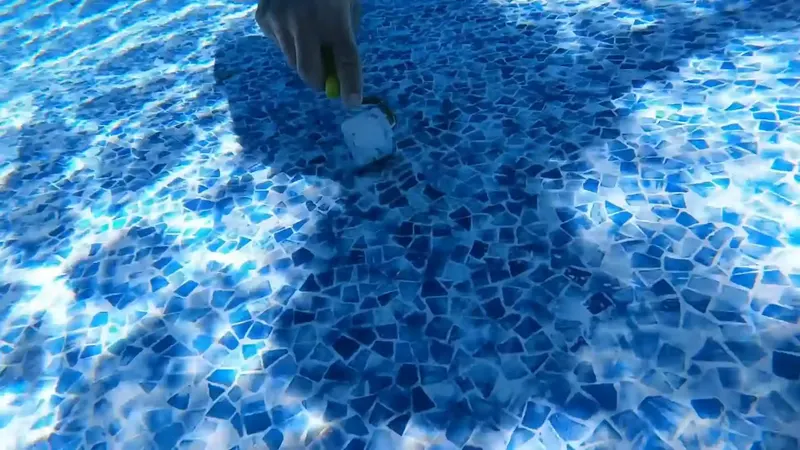
Pool leaks originate from three general sources: structural cracks in the shell, fittings and penetrations where plumbing enters the shell, and underground plumbing lines running from the pool to the equipment pad. A visual inspection of the shell surface can identify obvious cracks, particularly at pool corners, step risers, and around light niches and main drains. But many structural cracks are hairline-width and require dye testing to confirm: we apply a small amount of pool-safe dye near the suspected crack and watch whether it is drawn in by negative pressure, which confirms an active leak path.
Underground plumbing failures require pressure testing. We cap the return and suction lines at the equipment pad and pressurize each circuit independently while watching the gauge for drop. A confirmed pressure drop on a specific circuit tells us the underground line for that circuit is compromised. On hillside Pacific Ridge and California Renaissance properties, where pool plumbing runs on steep grades down to equipment pads at the lower edge of the pad, a failed underground return line can route water along the grade for considerable distance before it surfaces. Acoustic listening devices, the same tools we use for acoustic leak detection on supply lines, can also locate plumbing leak positions under pool decks by listening for the release frequency through the concrete surface.
Hillside Pool Considerations in Aliso Viejo
Most Aliso Viejo pools sit on hillside graded pads, which changes how pool leaks behave and what damage they cause. On a flat-lot pool, water from a crack or failed fitting tends to saturate the immediate surrounding soil and stay near the pool. On a hillside pad, that water follows the grade. A sustained leak on the upslope side of the pool can migrate under the pad, saturate the fill material, and create the same differential settlement risk we discuss on the foundation leak detection page for supply-line failures. If you notice soft spots in the pool deck, new cracks at expansion joints, or any change in the levelness of the decking on the upslope side of the pool, those are signs the pool may have been leaking into the fill for long enough to affect pad integrity.
The Aliso and Wood Canyons Wilderness Park borders parts of Aliso Viejo's southern edge, and the canyon watershed is a protected environmental area. Pool leaks that reach the storm drain system and eventually Aliso Creek can carry pool chemicals into a sensitive watershed. That is an environmental reason beyond the bill to address pool leaks promptly in this community.
Repair Options After Detection
Shell crack repair depends on crack type, depth, and location. Hairline cracks at non-structural locations can often be epoxy-injected or hydraulically patched from inside the pool. Structural cracks at corners, around light niches, or at step risers may require draining the pool and applying structural repair from the outside. We assess each crack individually before recommending a repair method.
Failed fittings and penetrations are repaired by replacing the fitting or resealing the penetration. Underground plumbing failures are repaired by spot excavation and pipe replacement or by trenchless pipe lining for longer line runs under pool decking. If the pool has a spa or hot tub sharing the same plumbing circuit, see our hot tub and spa leak repair page for the additional considerations that apply. Call (949) 325-3122 to schedule pool leak detection.
Frequently Asked Questions
The standard test is the bucket method: fill a five-gallon bucket with pool water, set it on a pool step, and mark both the bucket water line and the pool water line. After 24 hours, compare the drop in each. If the pool dropped more than the bucket, the difference is likely a leak. In Aliso Viejo's Mediterranean climate, summer evaporation can reach half an inch per day. If your pool is losing more than that plus the bucket rate, a structural or plumbing leak is present. Call (949) 325-3122.
We start with a visual inspection of visible pool equipment, fittings, and shell surfaces. We then pressure-test the underground plumbing circuits, pressurizing each line to isolate which circuit is leaking. Dye testing at pool fittings, skimmers, lights, drains, and returns confirms the exact leak entry point. For hillside Aliso Viejo pools on graded pads, we also check around the shell perimeter for soil separation that may indicate structural crack leakage. Call (949) 325-3122.
Yes. A pool on a graded hillside pad in Pacific Ridge, Coronado Pointe, or California Renaissance can lose water into the compacted fill beneath the pad. Prolonged saturation of that fill creates the same differential settlement risk as a slab leak in the same terrain. If you notice soft spots in the decking or new settling on the upslope side of the pool, it may have been leaking into the pad fill long enough to affect the grade. Call (949) 325-3122 for a combined assessment.