
Sewer Line Leak Repair in Aliso Viejo, CA
Sewer line problems in Aliso Viejo's hillside terrain do not always announce themselves with a blockage. A cracked lateral line on a steep pad slope can release wastewater into the fill beneath the yard for weeks before it surfaces visibly. Moulton Niguel Water District operates the wastewater collection system in Aliso Viejo; the homeowner is responsible for the lateral from the house to the MNWD main. We inspect with a video camera first, locate the problem, then recommend the least-disruptive repair path. Call (949) 325-3122 to schedule.
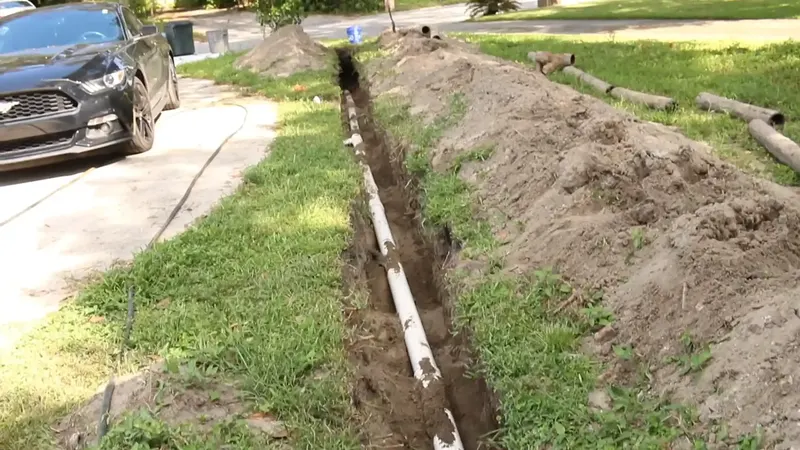
Hillside Drain Lines and the Aliso Creek Watershed
Aliso Creek runs through Aliso Canyon from the Saddleback Valley to the Pacific at Laguna Beach, and the watershed that feeds it includes the slopes Aliso Viejo is built on. MNWD's integrated wastewater system collects from this hillside network and routes it to the Moulton Niguel Regional Water Reclamation Facility. The hillside character of the drainage area means that sewer lateral lines in Aliso Viejo run on steeper grades than in flat basin cities, which changes how failures behave.
On a steeply sloped lateral, a crack or joint separation releases wastewater that immediately follows the pad or yard slope downhill. This means the wet or odorous area visible in the yard may be well downslope from where the actual break is. A camera inspection that starts at the cleanout and moves toward the street main is the only reliable way to locate the failure point on a hillside lateral. We do not guess at the location and then dig; the camera tells us where to go.
Root intrusion from the chaparral and ornamental landscaping common in Aliso Viejo's master-planned neighborhoods is the leading cause of lateral failures in the first-phase homes. The ABS drain lines installed in Glenwood, Westridge, and Audubon during the 1980s build-out are susceptible to fine root infiltration through service connections and joints. In the later-phase neighborhoods like Audubon Crossing and California Renaissance, PVC laterals are more common and root-resistant but can still separate at joints under slow seismic movement from the San Joaquin Hills Fault system. The underground leak detection process we use for supply lines applies to drain line location as well when the camera cannot access the line directly.
What a Camera Inspection Reveals
We insert a waterproof HD camera into the cleanout and push it toward the street main, recording the full journey. The footage reveals root intrusion, pipe cracks, joint offsets caused by soil movement, grease buildup in kitchen-side laterals, and any bellying or reverse-slope sections where standing water collects. For a Vantis townhome with a shared lateral or an Audubon Crossing home on a steep rear-yard grade, the camera is the only way to identify which type of failure is present before committing to a repair approach.
We provide the footage to the homeowner along with a written assessment. If MNWD's wastewater crew needs to be involved because the failure is at or near the main connection point, the footage documents exactly where the property boundary ends and the district infrastructure begins. That documentation can save significant time and money in disputes over repair responsibility.
Trenchless Lining vs. Excavation
On hillside Aliso Viejo properties, trenchless sewer lining is often the preferred repair method. Digging a trench down a steep ornamental slope or through a retaining-wall system to access a cracked lateral is expensive and disruptive. Trenchless pipe lining inserts a resin-saturated felt liner through the cleanout, inflates it against the existing pipe walls, and cures it in place with hot water or UV light, creating a new structural pipe inside the old one. The result is a jointless, root-resistant liner that restores full flow capacity without excavation.
Trenchless lining is appropriate when the existing pipe is structurally sound enough to hold the liner during curing, which the camera footage confirms. When the pipe has collapsed sections, large offsets, or significant deterioration, partial or full excavation may be unavoidable. We present both options with a clear explanation of what the footage shows before recommending either. If the situation involves a supply-side slab leak at the same time as a drain failure, we sequence the repairs to avoid opening the slab twice. If root intrusion has spread into multiple cleanout sections, the non-invasive leak detection approach lets us map the extent before committing to a repair method. Call (949) 325-3122 to schedule a camera inspection.
Frequently Asked Questions
The main causes are root intrusion from hillside vegetation, joint separation in ABS or clay drain lines on steeply sloped pads, and slow seismic settlement from the San Joaquin Hills Fault system that can shift pipe alignment over years. Homes in Vantis and Audubon Crossing with newer PVC drains tend to see joint separations; older ABS lateral lines in Glenwood and Westridge are more prone to root intrusion. Call (949) 325-3122.
In many Aliso Viejo cases yes, using trenchless pipe lining. We insert a resin-saturated liner into the existing pipe and cure it in place, creating a new pipe-within-a-pipe without excavation. This is especially practical on hillside properties where excavating a steep yard is disruptive and costly. Whether trenchless lining is suitable depends on the pipe's current condition, which we determine with a video camera inspection first. Call (949) 325-3122 to schedule.
In Aliso Viejo, Moulton Niguel Water District provides wastewater service. The homeowner is generally responsible for the lateral line from the house to the point it connects to the MNWD main in the street. MNWD is responsible for the main. If your camera inspection shows a failure in the lateral before it reaches the street main, that repair is your responsibility. We can help you understand the footage and where the property boundary is. Call (949) 325-3122.