
Electronic Leak Detection in Aliso Viejo, CA
Electronic leak detection combines electromagnetic pipe tracing with acoustic amplification to locate buried supply line failures and sub-slab breaks where the pipe route is not known. In Aliso Viejo's hillside terrain, where buried service lines follow slopes rather than straight paths between the MNWD meter and the home, knowing the actual pipe route before acoustic scanning substantially reduces the search area and improves location accuracy. Call (949) 325-3122 for electronic leak detection throughout South Orange County.
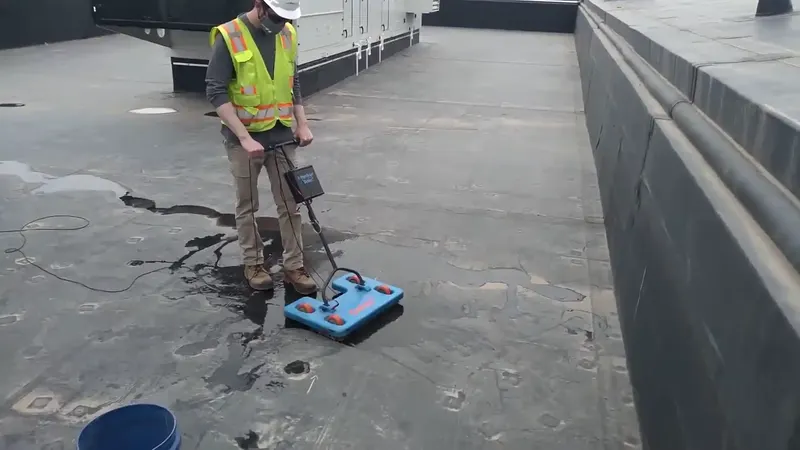
Electromagnetic Pipe Tracing in Aliso Viejo's Hillside Soil
Electromagnetic line tracing works by attaching a signal transmitter to a metallic pipe at an accessible connection point, typically the MNWD meter box at the curb or an indoor cleanout, and walking the surface with a receiver that detects the transmitted signal through the soil or slab above. The receiver output traces the actual pipe route as-installed, which on Pacific Ridge, Coronado Pointe, and Glenwood hillside lots may deviate significantly from a straight-line assumption between the meter and the house due to grade changes, retaining wall avoidance, and directional changes made during the original 1980s installation.
The Saddleback Valley's sandstone and siltstone soil creates a mixed-conductivity environment for electromagnetic tracing. We adjust the transmitter frequency and gain settings to optimize signal clarity through the specific soil composition encountered on each property. Once the route is traced and mapped on the surface with marking flags, we switch to the acoustic detection mode along the traced route to locate the failure point precisely. The combination of known route plus acoustic scanning is substantially more accurate than acoustic scanning alone over an unknown path, because we are scanning the correct line rather than searching a broader area. For the acoustic scanning process specifically, see our acoustic leak detection page.
For non-metallic PEX or poly irrigation lines where electromagnetic tracing does not work directly, we use tracer wire or a water-activated tracer probe introduced into the line at the cleanout. The tracer probe transmits a locatable signal as it flows with the water in the pressurized line, allowing route tracing for non-metallic buried pipe. For the helium tracer gas method used when tracer wire is not present and electronic tracing is not effective on the specific line type, see our tracer gas leak detection page. Call (949) 325-3122.
Electronic Detection on Sub-Slab Pipe Runs
Sub-slab supply lines in Aliso Viejo's first-phase homes run from the slab entry point, where the line penetrates the concrete from below, to the branch points beneath the slab where individual circuits split toward bathroom, kitchen, and laundry locations. The route of these sub-slab runs is typically not documented and not visible without concrete access. Electronic pipe tracing through the slab surface, using a transmitter attached at the main shutoff or at a branch valve, allows us to map the sub-slab route before scanning acoustically for the failure. This is particularly valuable on hillside slab properties in Westridge and Audubon where the pad slope means sub-slab lines may run at a grade rather than horizontally, and the failure could be anywhere along an elevated or declining run. Knowing the route before scanning saves time and prevents acoustic false positives from ambient building vibration at locations away from the actual pipe path. Call (949) 325-3122.
Frequently Asked Questions
Electronic leak detection uses electromagnetic pipe tracing to map the route of a buried or sub-slab pipe before the leak is located. Acoustic leak detection uses a ground microphone to listen for the sound of water escaping under pressure from the pipe. In practice, we combine both: electronic tracing first to identify the pipe route, then acoustic scanning along that route to locate the failure point precisely. Either method alone is less accurate than the combination for buried or sub-slab lines. Call (949) 325-3122.
PEX is non-metallic and does not respond to standard electromagnetic tracing. For PEX supply lines in Vantis and newer Aliso Viejo construction, we use a water-activated tracer probe introduced into the line at the shutoff point, or we apply acoustic scanning directly if the pipe route is known from installation records. For buried PEX irrigation poly lines, tracer wire installed alongside the line at original construction is the standard tracing method. Call (949) 325-3122.
We use removable marking flags and water-soluble chalk line markings that wash away within a few rain cycles or can be removed manually. For hillside lots in Pacific Ridge and Coronado Pointe where the traced route crosses landscaped areas, we photograph the route mapping before removing flags so the documented route is preserved in our assessment record. Call (949) 325-3122.