
Garbage Disposal Leak Repair in Aliso Viejo, CA
Garbage disposal leaks in Aliso Viejo kitchens appear from three distinct locations: the sink flange at the basin top, the dishwasher drain inlet on the disposal body, and the discharge drain tube at the bottom of the disposal connecting to the P-trap. Each location requires a different repair approach, and all three are common in the aging kitchens of Glenwood, Westridge, and Audubon homes where original disposal units have been in service for 20 to 30 years. Call (949) 325-3122 for garbage disposal leak repair throughout South Orange County.
The Three Disposal Leak Locations and What Causes Them
The sink flange is the assembly that seals the disposal inlet to the kitchen sink basin opening. A rubber gasket or plumber's putty seals the mounting flange to the sink surface. When that putty dries and pulls away from the sink, or when the mounting bolts loosen from repeated disposal vibration, water leaks from the sink basin down around the flange and drips from the top of the disposal body. This type of leak is visible as dripping directly from the disposal body and is easy to confuse with a unit body failure. The repair is removing the disposal from the mounting ring, cleaning the old putty or gasket from both surfaces, reseating the flange with fresh plumber's putty, and reinstalling the unit. In Glenwood and Westridge kitchens where the original disposal was installed in the 1980s, the mounting ring and flange assembly should also be inspected for corrosion while the unit is removed.
The dishwasher inlet is a barbed port on the side of the disposal body where the dishwasher drain hose connects. If the hose clamp loosens or the hose deteriorates at the connection point, water from the dishwasher drain cycle leaks at the inlet. This drip appears only during dishwasher drain operation, typically 45 to 90 minutes after a wash cycle begins. The repair is hose clamp tightening or drain hose replacement. For sink drain issues that extend beyond the disposal to the P-trap and drain line, see our sink leak repair page. Call (949) 325-3122.
Disposal Body Failures and Replacement
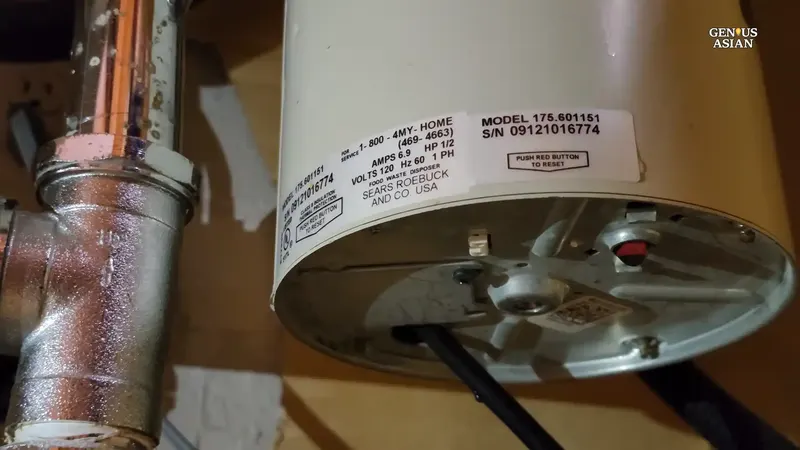
Garbage disposal bodies in first-phase Aliso Viejo homes from the 1980s may be 20 to 30 years old. Disposal unit bodies are cast iron or aluminum with internal components that wear over that period. MNWD's moderately hard water deposits scale on the grinding components and the body interior walls over years of use. When scale accumulates between the grinding ring and the mounting plate at the drain outlet, it can cause leaks at the lower discharge tube connection or at the body-to-mounting interface. When a disposal body itself is failing rather than a connection or flange seal, replacement of the unit is typically more cost-effective than repair. We carry replacement units in common sizes and power ratings and can complete the swap in a single visit. For the broader drain system context the disposal connects to, see drain leak repair. Call (949) 325-3122.
Frequently Asked Questions
The three leak locations are: top of the disposal body (flange seal failure at the sink basin), the side of the disposal body (dishwasher inlet hose connection loose or failed), and the bottom of the disposal body (discharge tube connection to the P-trap failed, or the unit body itself is cracked). Each location drips in a distinct pattern and at different times during kitchen use. We identify the exact source on arrival. Call (949) 325-3122.
Yes. A slow disposal flange leak that drips only when the sink is in use can saturate the under-sink cabinet floor over weeks without being noticed, particularly if items stored under the sink obscure the base. Sustained moisture in the cabinet floor and the wall behind it can produce mold growth and damage the cabinet structure. We check the cabinet interior condition and the wall moisture level during every disposal leak repair visit. Call (949) 325-3122.
Standard garbage disposals have a design life of 8 to 12 years under normal use. In Aliso Viejo, MNWD's moderately hard water deposits scale on internal components and accelerates grinding component wear compared to soft-water cities. Original disposals in first-phase homes from the 1980s that have not been replaced are well past design life and should be replaced rather than repaired when a leak develops. Call (949) 325-3122.